
AWD vs 4x4 for Long Island Winters: Which Used Vehicle Fits the Way You Drive?
- What's the real difference between AWD and 4x4?
- How do they handle snow, slush and black ice?
- Which one is nicer for everyday driving and fuel use?
- What if you tow, plow or live down an unplowed road?
- What will each one cost to own after you buy it?
- Which body styles and vehicles can you actually find used?
- What should you check before buying a used AWD or 4x4?
- So which one fits you: AWD or 4x4?
- Key takeaways
What's the real difference between AWD and 4x4?
Because our dealership sells cars, SUVs and trucks from many different manufacturers, we're not tied to one system. That lets us explain both without a sales slant. Here's the plain-language version.
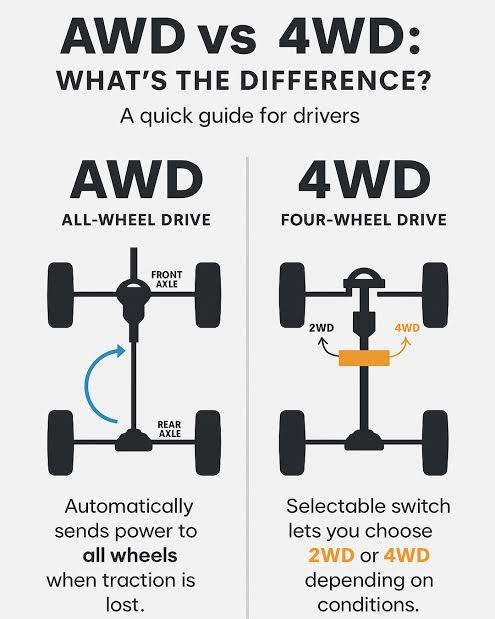
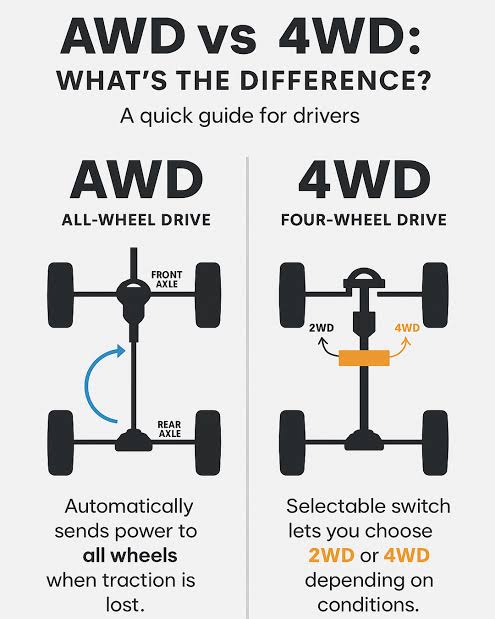
AWD
All-wheel drive sends power to all four wheels, and the vehicle decides on its own how much goes where. You don't flip a switch or pull a lever. You'll find some version of it on crossovers, wagons, many sedans and plenty of SUVs. It's designed to be automatic and invisible, which is why it suits daily commuting so well.
4x4
Four-wheel drive, often written 4x4 or 4WD, is usually a system you control. A transfer case lets you lock power to the front and rear axles, and many setups add a low-range gear for slow, heavy-duty work. You'll see it most on trucks and rugged SUVs. It's more of a tool you choose to use when conditions get serious.
One warning: the names get blurry. Some vehicles wear a 4WD badge but behave a lot like AWD, so ask what a specific vehicle actually has instead of relying on the label.
How do they handle snow, slush and black ice?
On Long Island, winter rarely means one thing. One week it's a light dusting, the next it's slush on the main roads, ice on the side streets, or a nor'easter that buries the driveway. Here's how each system deals with it.
AWD
AWD shines in the everyday stuff: pulling away from a snowy stoplight, climbing a slick incline, or getting out of a street that hasn't been plowed yet. Because it reacts on its own, you get extra traction without thinking about it. Plenty of buyers find that's exactly the confidence they were after for a commute.
4x4
4x4 shines when the snow is deep or the surface is truly rough. Locking the axles together, and on many models using low range, gives you serious grip and pulling power in heavy, unplowed snow. The tradeoff is that you have to pick the right mode for the conditions, and some part-time systems aren't meant for dry or merely wet pavement.
One honest caveat applies to both: neither system helps you brake or turn better on ice. Your tires and your speed do that work, so plan for good ones.
Which one is nicer for everyday driving and fuel use?
Most of your miles are ordinary ones: work, school, errands, the occasional trip upstate. So it's worth asking which system feels better on a normal Tuesday, not just on a snow day.
AWD
AWD vehicles generally drive like the regular cars and crossovers they're based on. The ride tends to be smoother and quieter, parking is easier, and there's nothing to engage or disengage. Adding all-wheel drive does add weight and moving parts, so fuel economy can be a bit lower than the two-wheel-drive version of the same model. Compare that against the same model without AWD if you can.
4x4
4x4 is most often found on larger, heavier trucks and SUVs built for work. That usually means a firmer ride, more road noise, and a higher step in and out. Fuel use tends to be higher simply because of the size and weight of the vehicle, not only the drivetrain.
Neither is better in the abstract. If your driving is mostly pavement, AWD tends to feel more natural. If you want a work-ready vehicle that happens to commute, the trade-offs of 4x4 may be worth it.
What if you tow, plow or live down an unplowed road?
This is where the two systems separate most clearly, so be honest about how you'll really use the vehicle, not how you imagine using it on your best day.
AWD
For a typical suburban driveway, a school run, or a light utility trailer within the vehicle's rating, AWD is often plenty. It helps you get going on slippery surfaces and keeps the vehicle stable on unpredictable pavement. What it generally lacks is the low-range gearing and heavy-duty build that serious off-pavement or heavy-pulling work calls for.
4x4
If you tow a boat or heavy trailer, mount a plow, haul loads, or drive on sandy or unmaintained roads, 4x4 is built for that kind of work. Low range gives you controlled power at slow speeds, and trucks in this category are usually engineered for heavier demands. Before you plan on a plow or a big trailer, check the manufacturer's guidance for that exact vehicle.
Remember that towing capacity belongs to the specific vehicle, not to the drivetrain label. Always check the rating for the model you're considering, and ask us if you'd like help reading it.
What will each one cost to own after you buy it?
The sticker on the windshield isn't the full story, which is why we help buyers look at total cost of ownership, not just the purchase price. Both systems add complexity compared with two-wheel drive, so it's worth knowing what to expect.
AWD
AWD systems have extra components, such as differentials and power transfer units, that need fluid changes on the schedule the maker recommends. Tires matter too. Many manufacturers advise keeping all four tires closely matched in wear and size, which can mean replacing them as a set. Skipping that can strain the system over time.
4x4
4x4 vehicles have a transfer case, front and rear differentials and sometimes locking hubs, all of which benefit from regular service. Because these vehicles are often bigger, tires, brakes and fuel can also run higher. Parts are usually widely available, and they're built for tough use.
We also offer used-vehicle warranty and coverage options designed around your driving habits and budget, which can add peace of mind after the sale. If you're weighing a payment, you can apply for financing on our site and see how the numbers fit before you decide.
Which body styles and vehicles can you actually find used?
A drivetrain only matters if it comes in a vehicle you want to drive. As a pre-owned dealership rather than a single-brand new-car franchise, we can offer a wider mix, so you're not choosing from one manufacturer's lineup.
AWD
AWD is common across compact crossovers, midsize SUVs, wagons, minivans and some sedans. That means you can often get winter traction in a vehicle that also fits your family, your commute and your garage. If you want a smaller, easier-to-park vehicle with a bit more grip, this is usually where you'll look first.
4x4
4x4 is the standard choice among pickup trucks and traditional full-size and rugged SUVs. If you need a bed, a high ground clearance, or the ability to haul and tow, this is where that capability lives. Inventory changes constantly, so what's available this week may differ next week.
If you're replacing something you already own, you can value your trade on our site and see how it might offset the next vehicle. That makes it easier to compare an AWD crossover and a 4x4 truck on the same budget.
What should you check before buying a used AWD or 4x4?
A used vehicle's history shows up in how it drives, so go in with a checklist. A test drive tells you more than a spec sheet ever will.
AWD
- Look at the tires: all four should be the same brand, size and similar wear.
- Listen for humming, whining or clunking when turning or accelerating.
- Ask for service records showing fluid changes for the differentials and transfer components.
- Check for warning lights on the dash, especially traction or drivetrain messages.
4x4
- Engage and disengage 4x4 modes during the test drive, including low range if it has it, and confirm the switch or lever works smoothly.
- Listen for grinding, binding or vibration when the system is engaged.
- Look underneath for leaks around the transfer case and axles, and for rust on the frame.
- Ask whether the vehicle has been used for towing, plowing or off-road work, since that affects wear.
On any vehicle, take a drive that includes turns, stops, and a bit of highway. A thorough test drive is the best way to spot problems before they become your problems.
So which one fits you: AWD or 4x4?
Here's the honest bottom line, side by side. Most Long Island buyers will be well served by AWD, and a smaller group genuinely benefits from 4x4.
AWD fits you if
- You mostly commute on plowed roads and want added grip without thinking about it.
- You want a smoother ride and easier parking.
- You're after a crossover, wagon or SUV for family life.
4x4 fits you if
- You tow heavy trailers, haul loads or plan to mount a plow.
- You regularly face deep snow, unmaintained roads or sandy ground.
- You want a truck or rugged SUV built for work.
Whichever you choose, put money toward good tires, because they matter more than the drivetrain when you need to stop. The easiest way to settle it is to feel the difference yourself. Schedule a test drive with us, tell us how you drive, and we'll help you compare AWD and 4x4 options from different manufacturers on one lot.
Port Jefferson Station, NY
Sun 11am–4pm
- AWD is automatic and best for everyday commuting; 4x4 is driver-selected and best for towing, plowing and deep or rough conditions.
- Neither system helps you stop on ice, so good tires and sensible speed matter as much as the drivetrain.
- Look at total cost of ownership, including tires, fluids and warranty options, not just the purchase price.
- Offers cars, SUVs and trucks from multiple manufacturers.
- Provides financing assistance and an online finance application.
FAQ Common questionsIs AWD enough for Long Island winters?For most buyers, yes. If you mostly drive on plowed roads and want extra traction for starting out and climbing slick spots, AWD does that well. If you tow, plow or regularly face deep snow, 4x4 may be a better match. Do I still need winter tires with AWD or 4x4?Winter tires are worth considering with either system. AWD and 4x4 help you accelerate, but braking and turning on ice depend on your tires. Ask us about the tires on any vehicle you're considering. Can I use 4x4 on dry pavement?It depends on the system. Many part-time 4x4 setups are meant for slippery or loose surfaces and can bind on dry pavement. Check the owner's manual for the specific vehicle, or ask us how its system is meant to be used. Is AWD or 4x4 more expensive to maintain?Both add parts and service needs compared with two-wheel drive. AWD often calls for matched tires and regular fluid changes, while 4x4 has a transfer case and axles to maintain. We can help you look at total cost of ownership and discuss warranty options. Can I trade in my current vehicle toward an AWD or 4x4?Yes. We provide trade-in valuation and support, and you can value your trade on our site. Having that number makes it easier to compare AWD and 4x4 vehicles within your budget. |
Feel the difference on a test drive Or call (631) 496-7650 · 1444 New York 112, Port Jefferson Station |